


Choosing between ceramic vs titanium dental implants is one of the most important decisions you’ll make when replacing missing teeth. Dental implants have revolutionized modern dentistry, offering a permanent solution that looks, feels, and functions like natural teeth. With over 3 million Americans currently living with dental implants and that number growing by 500,000 each year, understanding your options is crucial for making an informed choice that affects your smile for decades.
The two primary materials used in dental implants today are titanium and ceramic (zirconia). While titanium has been the gold standard for over five decades, ceramic implants have gained significant popularity as a metal-free alternative. Your choice between these materials can dramatically impact the longevity, appearance, comfort, and overall success of your tooth replacement journey.
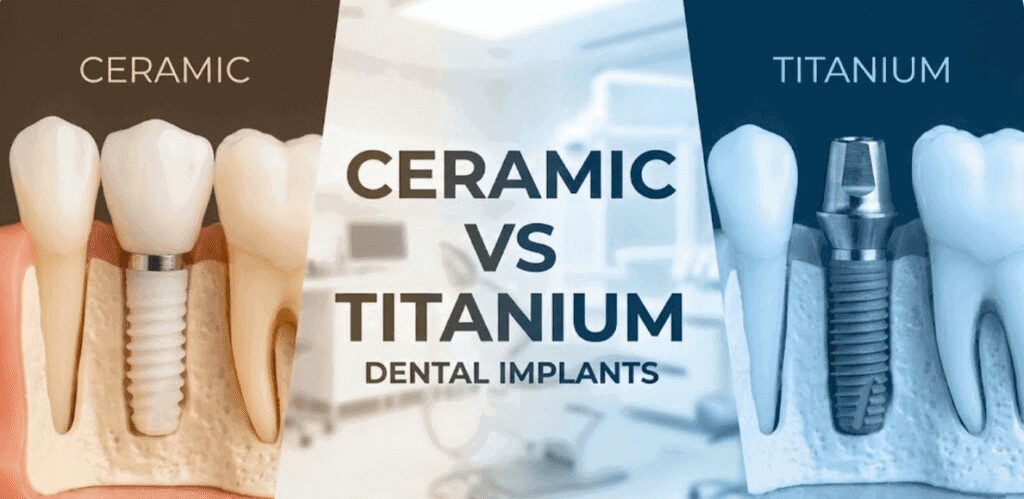
Quick Comparison: Ceramic vs Titanium Implants
| Feature | Titanium Implants | Ceramic (Zirconia) Implants |
| Material | Titanium alloy (Ti-6Al-4V) | Zirconium dioxide (ZrO2) |
| Color | Gray/metallic | White/tooth-colored |
| Track Record | 50+ years of clinical data | 20+ years of clinical data |
| Biocompatibility | Excellent (99%+) | Excellent (metal-free) |
| Osseointegration | Proven and predictable | Good, slightly slower |
| Strength | Very high, flexible | High, more brittle |
| Aesthetics | May show through the gums | Superior translucency |
| Allergies | Rare titanium sensitivity | Hypoallergenic |
| Cost | Lower | 15-30% higher |
| Success Rate | 95-98% | 90-95% |
Understanding Dental Implant Materials
Titanium Implants: The Proven Standard
Titanium dental implants are manufactured from commercially pure titanium or titanium alloy, specifically Ti-6Al-4V. This remarkable material combines lightweight properties with exceptional strength, making it ideal for withstanding the considerable forces generated during chewing, which can reach up to 200 pounds per square inch in the molar region. Titanium’s corrosion-resistant properties ensure it remains stable in the moist environment of your mouth for decades without degrading.
Ceramic Implants: The Aesthetic Alternative
Ceramic dental implants are crafted from yttria-stabilized zirconia, a high-performance ceramic material that has proven itself in medical applications ranging from hip replacements to heart valves. As a completely metal-free alternative, zirconia implants appeal to patients seeking holistic dental solutions or those with documented metal sensitivities. The crystalline structure of zirconia provides impressive strength while maintaining a natural white appearance that closely mimics the color of natural tooth roots.
Biocompatibility: How Your Body Responds
One of the most critical factors in implant success is how well your body accepts the implant material. Titanium demonstrates exceptional biocompatibility with human tissue, which explains its widespread use not just in dentistry but also in orthopedic surgeries and cardiovascular implants. True titanium sensitivity affects less than 1% of patients, making adverse reactions extremely rare. However, some patients express concerns about metal ion release, though scientific evidence shows minimal risk of harm from properly placed titanium implants.
Zirconia offers a completely metal-free option that addresses these concerns entirely. There are no worries about metal ion migration into surrounding tissues, which appeals to patients following specific health philosophies or those with autoimmune conditions who prefer to avoid metal exposure. Additionally, ceramic implants don’t interfere with MRI or other medical imaging technologies, eliminating concerns about artifacts that can occasionally occur with titanium.
Osseointegration: The Foundation of Success
Osseointegration—the process where your jawbone fuses directly with the implant surface—is the cornerstone of implant dentistry. Titanium remains the gold standard for this critical process. It forms direct bone-to-implant contact at the microscopic level, creating a stable foundation that can last a lifetime. The integration timeline is highly predictable, typically taking 3-6 months for complete fusion, allowing dentists to plan treatment with confidence.
Zirconia implants achieve good osseointegration, though research suggests the process may take slightly longer compared to titanium. Modern ceramic implants feature advanced surface treatments that have significantly improved integration rates over earlier generations. The biological mechanism differs somewhat from that of titanium, but the result—a stable, functional implant—is comparable when proper protocols are followed.
Aesthetics: When Appearance Matters Most
For many patients, particularly those replacing front teeth, the appearance of dental implants is just as important as their function. This is where ceramic and titanium implants differ most dramatically. The gray metallic color of titanium can show through thin gum tissue, creating a shadowy appearance at the gum line. This becomes especially noticeable in patients with naturally thin or translucent gums, and the problem can worsen if gum recession occurs over time.
Ceramic implants solve this aesthetic challenge completely. The white color of zirconia closely mimics natural tooth roots, making the implant virtually undetectable even in patients with fragile gum tissue. This superior translucency makes ceramic the preferred choice for the anterior region, where your smile is most visible. Even if minor gum recession occurs years after placement, the ceramic implant maintains its natural appearance without the telltale gray line that can appear with titanium.
Strength and Durability Comparison
Titanium possesses exceptional tensile strength while maintaining some flexibility that helps absorb and distribute the forces of chewing. This combination results in remarkably low fracture rates, even under extreme conditions. Clinical evidence demonstrates proven longevity exceeding 20 years in the majority of patients, with many titanium implants lasting 30 years or more when properly maintained.
Zirconia is extremely hard but more brittle compared to titanium, meaning it’s less tolerant of lateral (sideways) forces that occur during grinding or heavy chewing. Earlier generations of ceramic implants experienced higher fracture rates, which gave some dentists pause about recommending them. However, modern designs have significantly addressed these concerns through improved manufacturing techniques, better quality control, and design modifications that distribute forces more effectively.
Clinical Success Rates and Research
Numbers tell an essential story. Titanium implants boast success rates consistently ranging from 95% to 98% across diverse patient populations and clinical situations. With over 50 years of clinical use and thousands of published studies, the evidence base for titanium is unmatched in implant dentistry.
Ceramic implants show success rates typically ranging from 90-95%, which represent excellent outcomes, though slightly lower than those of titanium. The difference of a few percentage points may seem small, but it reflects both the shorter track record of ceramic implants and their more selective application. As manufacturing improves and more long-term data becomes available, these success rates continue to trend upward.
Cost Considerations: Investment in Your Smile
Dental implants typically cost $3,000 to $6,000 per tooth, depending on location and complexity. Titanium implants are generally the more affordable option, costing 15-30% less than ceramic alternatives. This price difference stems from several factors: titanium has lower material costs, more efficient manufacturing processes due to decades of production refinement, and greater market competition among manufacturers.
Ceramic implants command premium pricing due to higher material costs, more complex manufacturing requirements, and the specialized training required for proper placement. Insurance coverage for ceramic implants is also more limited, as some carriers view them as elective or cosmetic upgrades rather than standard treatment. However, many patients view the additional cost as worthwhile for the aesthetic benefits and peace of mind that come with a metal-free restoration.
Who Should Choose Ceramic Implants?
Ceramic implants are an excellent choice for patients with confirmed metal allergies or sensitivities who need to avoid potential adverse reactions. If you’re replacing front teeth where aesthetics are paramount, the natural white color of ceramic provides superior results that won’t compromise your smile. Individuals with thin gum tissue particularly benefit from ceramic’s tooth-like color that eliminates the risk of gray show-through. Those following holistic health philosophies or seeking metal-free dental treatments find ceramic implants align perfectly with their wellness values.
Who Should Choose Titanium Implants?
Titanium implants remain the preferred choice for patients seeking the most proven option with five decades of documented success. If you have complex dental needs requiring bone grafts, immediate loading, or full-arch restorations, titanium’s versatility offers more treatment options. Cost-conscious patients benefit from titanium’s lower price point and broader insurance coverage. Replacing molars or teeth in areas subject to high chewing forces is ideally suited to titanium’s superior strength and flexibility. Patients requiring immediate placement and loading protocols have significantly more options with titanium systems.
Making Your Final Decision
The choice between ceramic and titanium dental implants ultimately depends on your unique situation. Consider the location of your missing tooth—front teeth often benefit from ceramic’s superior aesthetics, while titanium’s proven durability may better serve back teeth. Your aesthetic priorities, budget constraints, any existing metal sensitivities, and personal health philosophy all play essential roles in this decision.
The most valuable step you can take is consulting with an experienced implant dentist who regularly places both types of implants. A qualified dental professional will evaluate your bone density, gum tissue thickness, bite forces, and overall dental health to recommend the optimal solution for your specific case.
Whether you choose ceramic or titanium dental implants, both represent advanced dental technology capable of restoring your smile, confidence, and ability to eat comfortably for decades. The right choice is the one that addresses your unique needs while giving you confidence in your investment in dental health. Schedule a consultation today to determine which implant material will deliver the best long-term results for your situation.
