


If you’re wondering whether dental implants can be removed and replaced with dentures, the straightforward answer is yes—though it’s far from a simple switch. Many patients find themselves considering this transition due to implant complications, mounting financial pressures, or changing health conditions. While dental implants are designed as permanent solutions with impressive success rates, certain circumstances make removal necessary or even preferable for your overall well-being.
The process involves surgical extraction of the titanium posts embedded in your jawbone, followed by a healing period of several months before dentures can be properly fitted. Dealing with failed implants, facing ongoing maintenance costs, or reconsidering your original choice all require understanding what this transition truly involves to make the most informed decision for your situation.
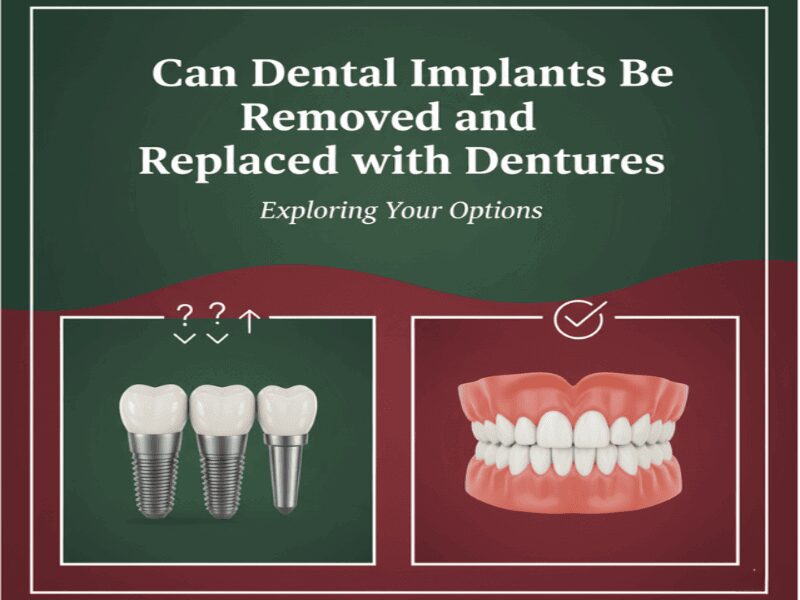
Quick Comparison: Dental Implants vs. Dentures After Removal
| Factor | Keeping Implants | Switching to Dentures |
| Procedure Complexity | No additional surgery needed | Requires implant removal surgery + healing time |
| Cost | Repair costs ($500-$3,000) | Removal ($500-$1,500) + dentures ($1,000-$4,000) |
| Bone Preservation | Maintains jawbone density | Progressive bone loss over time |
| Durability | 15-25+ years with proper care | Replacement needed every 5-8 years |
| Eating Ability | 90% of the natural bite force | 25-30% of natural bite force |
| Daily Maintenance | Brush and floss like natural teeth | Remove for cleaning, adhesives needed |
| Recovery Time | None (unless repairs are needed) | 3-6 months for complete healing |
| Aesthetics | Natural look, fixed in place | Can slip, may look less natural |
Understanding the Implant Removal Process
Removing a dental implant requires surgical intervention performed by an oral surgeon or periodontist. The procedure uses a counter-rotating technique that carefully reverses the implant’s fusion with your jawbone. Under local anesthesia or sedation, the surgeon accesses the implant site and gradually loosens the titanium post from surrounding bone tissue. Each implant typically takes 30 to 60 minutes to remove, and modern techniques prioritize preserving as much healthy bone as possible, which becomes crucial if you’re planning to wear dentures afterward.
What to expect during recovery:
- Healing timeline: 3-6 months before your jaw is ready for dentures
- Initial discomfort: The First two weeks involve swelling and moderate soreness
- Dietary changes: Soft foods only during the early recovery phase
- Bone grafting: May cost $300-$1,200 per site, but improves denture stability
- Risk factors: Smoking, diabetes, and osteoporosis can extend healing time
Most patients experience minimal discomfort during the procedure itself, though post-operative soreness resembles the original implant placement recovery. Following your surgeon’s post-operative instructions carefully ensures optimal healing before transitioning to dentures.
When Implant Removal Becomes Necessary
Some situations demand immediate removal, while others make it optional. Understanding the difference helps you evaluate whether removal is truly your best path forward.
Necessary removal situations include:
- Failed osseointegration, where the implant never properly fused with bone
- Severe peri-implantitis infections that resist antibiotic treatment
- Nerve damage causing chronic pain or numbness
- Incorrect initial placement affecting bite function or aesthetics
- Significant bone loss compromising implant stability
Optional removal considerations involve:
- Financial constraints when repairs cost $2,000-$5,000 per implant
- Insurance coverage differences favoring denture reimbursement
- Chronic discomfort even without major complications
- Difficulty maintaining proper implant hygiene
- Desire to avoid future surgical interventions as you age
Medical conditions also play a significant role. Autoimmune disorders can prevent proper implant integration over time. Medication changes—particularly bisphosphonates for osteoporosis or immunosuppressants after organ transplants—affect implant viability. Cancer treatments involving radiation to the head and neck often necessitate implant removal to prevent serious complications down the road.
The Transition Process from Implants to Dentures
After implant removal, you face an important timing decision. Immediate dentures are placed the same day as extraction, allowing you to leave with teeth in place and maintain your appearance. However, they require frequent adjustments during the first months as your gums heal and reshape. Conventional dentures require waiting three to six months for complete healing, but offer superior fit and comfort from the start because they’re made for your fully healed jaw structure.
Bone changes significantly affect how your new dentures will fit and function. Implant removal sites heal differently from natural tooth extractions. The bone that once supported the implant gradually remodels, potentially creating irregular ridges that complicate denture fit. Ridge resorption, where your jawbone shrinks, occurs in all denture wearers but accelerates at former implant sites. You can expect 15% to 25% bone loss in the first year alone, which is why many dentists recommend bone grafting at removal sites despite the additional cost.
Working with your dentist on the transition plan involves:
- Scheduling comprehensive consultations before committing to removal
- Asking what’s causing implant problems and whether repair is possible
- Understanding what your bone structure will look like after removal
- Discussing how dentures will fit your specific jaw shape
- Creating realistic timelines and budgets for the entire process
- Getting second opinions from prosthodontists who specialize in tooth replacement
What Daily Life Looks Like with Dentures
The first 30 to 60 days challenge most patients switching from the stability of implants. Your speech temporarily changes as your tongue adapts to the new oral environment. Eating restrictions feel particularly frustrating compared to the freedom implants provided. Sore spots develop where dentures rub against gums, requiring multiple adjustment appointments. The psychological shift from permanent teeth to removable appliances affects many patients’ confidence initially, though most people adapt successfully within six months to a year.
Daily maintenance differs completely from implant care. You’ll remove dentures nightly for thorough cleaning, soak them in cleansing solutions, and clean your gums. Budget $200 to $400 annually for adhesives, cleansers, and ongoing supplies. Reline procedures every one to two years cost $300 to $500 and adjust the fit as your bone structure continues changing. Complete replacement every five to eight years runs $1,000 to $4,000 per set.
Functionality differences you’ll notice:
- Bite force drops from 90% of natural teeth (with implants) to just 25-30%
- Difficult foods include corn on the cob, chewy steaks, and crunchy apples
- Speaking clarity may suffer initially, but improves with practice
- Social confidence often dips due to worries about slippage
- Activities from sports to public speaking may require adjustments
Exploring Alternatives Before Final Decisions
Before removing implants entirely, explore whether repair might solve your problems. Sometimes the crown or abutment failed while the implant post remains solid and healthy. Revision implant surgery succeeds 85% to 90% of the time when performed by experienced surgeons. Compare costs carefully: repairing might run $1,500 to $3,000 versus $2,500 to $5,500 for removal plus dentures.
Consider hybrid solutions that combine the best of both worlds. The “All-on-4” approach uses four strategically placed implants to anchor full dentures, providing significantly better stability than traditional dentures while costing less than full-mouth implants—typically $15,000 to $30,000 per arch. You might also explore partial solutions where you remove only problematic implants while keeping successful ones, combining them with bridges and partial dentures for a customized approach.
Making Your Informed Decision
Understanding your insurance coverage thoroughly helps with financial planning. Most plans pay 50% for dentures but provide minimal coverage for implant repairs. Explore payment plans through dental offices or healthcare financing companies that specialize in medical procedures. Dental schools and community health centers offer quality care at reduced costs. Major dental expenses exceeding 7.5% of your adjusted gross income may qualify for tax deductions when you file your returns.
Join support groups and online communities where others share their experiences with this transition. Set realistic expectations—full adjustment to dentures takes six months to a year for most people. Schedule annual reassessments to evaluate your decision and make changes if your circumstances or needs evolve. Focus on quality of life measures that matter most to you personally, not just objective clinical measurements.
Final Words
While dental implants can be removed and replaced with dentures, this significant decision depends entirely on your individual medical needs, financial reality, and lifestyle priorities. Before committing to removal, explore every alternative, including repairs, partial solutions, and hybrid approaches. Work with experienced dental professionals who present all options honestly and respect your concerns. Consider long-term implications beyond immediate relief, including ongoing costs and functional changes. Make decisions based on your priorities and circumstances, not just general recommendations. Whether you keep your implants, switch to dentures, or find a middle path, modern dentistry offers solutions that can restore both function and confidence for years to come.
