


A dental implant procedure replaces a missing tooth root with a titanium post surgically placed in the jawbone, followed by a healing period, abutment attachment, and permanent crown placement. The full process typically spans 3 to 9 months, depending on whether preparatory work, such as bone grafting, is needed. This guide walks through every stage of the procedure so you know exactly what to expect before, during, and after surgery.
What Is a Dental Implant?
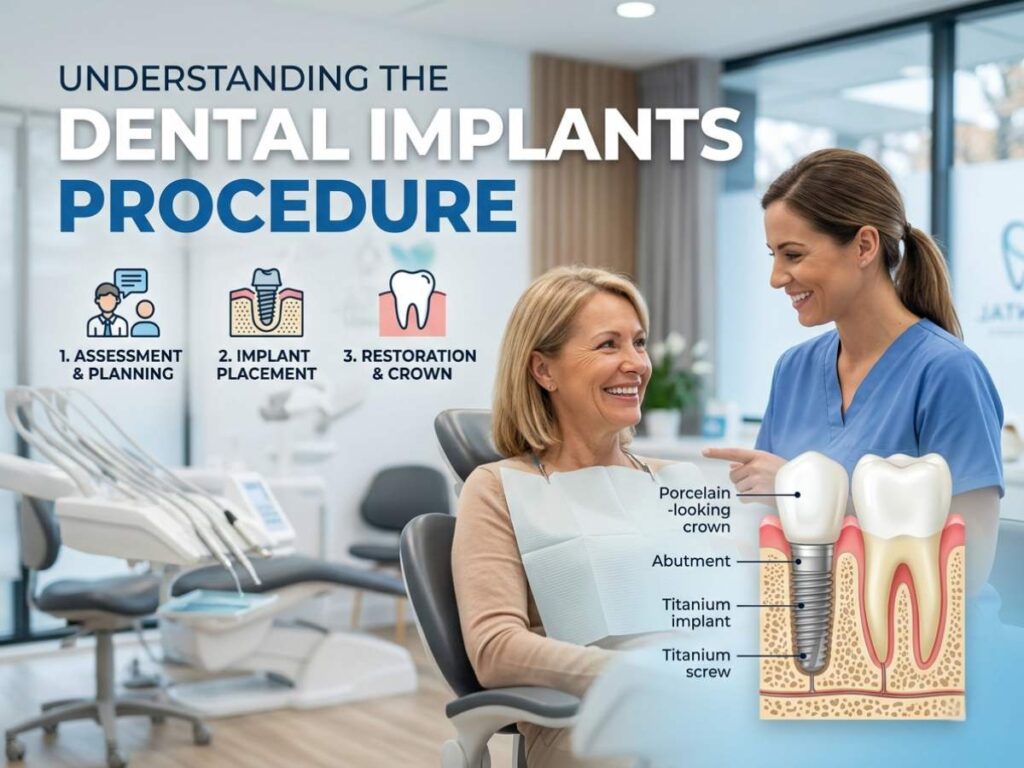
A dental implant is a three-part tooth replacement system: a titanium post (the implant body), an abutment that connects the post to the final restoration, and a custom crown that looks and functions like a natural tooth.
Titanium is the material of choice because it is lightweight, extremely strong, and has virtually no history of rejection by the body. Over time, the bone fuses directly to the post in a process called osseointegration, creating a permanent anchor in the jaw.
Modern implants succeed in over 95% of cases when placed by an experienced clinician. That success rate puts implants ahead of every other tooth replacement option in terms of long-term durability.
| Option | Longevity | Bone Preservation | Maintenance |
| Dental Implants | 25+ years (often lifetime) | Yes — stimulates the jawbone | Brush and floss normally |
| Dental Bridge | 10–15 years | No | Special floss is required under the bridge |
| Dentures | 5–10 years | No — accelerates bone loss | Removal and daily cleaning |
Am I a Candidate?
Most healthy adults with a missing tooth are eligible for dental implants. The core requirements your dentist will assess are:
- Sufficient jawbone density to anchor the titanium post securely
- Healthy gums with no active periodontal disease
- No uncontrolled chronic conditions, such as uncontrolled diabetes, that could impair healing
- Age 18 or older — jaw development must be complete before implant placement
- Non-smoker preferred — smokers face a measurably higher risk of implant failure, though they are not automatically excluded.
Some patients need preparatory work before an implant can be placed. Bone grafting addresses insufficient bone density; a sinus lift is required for certain upper jaw placements; active gum disease must be treated first; and damaged teeth still in place need to be extracted ahead of surgery.
If you are unsure whether you qualify, your dentist will confirm eligibility at the initial consultation using imaging and a full oral health assessment.
Dental Implants Procedure Step by Step
Standard implant placement is an outpatient surgery performed in stages. Here is exactly what happens at each phase.
Step 1: Initial Consultation and 3D Imaging
Your dentist or oral surgeon reviews your full dental and medical history, examines your gums and remaining teeth, and orders imaging. Most practices now use a CBCT (Cone Beam CT) scan alongside traditional X-rays to create a precise 3D map of your jawbone, including bone density, width, and the exact location of nerves and sinuses.
Digital planning software then allows the surgeon to simulate the entire procedure before any incision is made, optimizing the implant’s placement angle and depth for maximum stability. This step is what separates modern implantology from the guesswork of earlier decades.
Step 2: Preparatory Procedures (If Required)
Not every patient needs this stage. If you have sufficient healthy bone and no active gum disease, you move directly to surgery. For those who do need preparation:
- Tooth extraction: if a damaged or infected tooth is still present, it is removed,d and the site is allowed to heal partially
- Bone grafting: synthetic, donor, or autograft material is packed into areas of jawbone loss; the graft takes 3 to 6 months to consolidate before implant placement can proceed
- Sinus lift: specific to upper jaw cases where the sinus cavity sits too close to the planned implant site, a small amount of bone graft material is placed below the sinus membrane to create clearance
- Gum disease treatment: periodontal therapy is completed before any surgery to eliminate infection risk at the implant site
Step 3: Implant Post Placement
This is the surgical day. The area is numbed with local anesthesia; IV sedation or general anesthesia is available for patients who prefer a deeper level of comfort. You will feel pressure during the procedure, but not pain.
The surgeon makes a small incision in the gum to expose the jawbone, drills a precisely sized channel, and seats the titanium post into the bone. The procedure typically takes one to two hours for a single implant. Sutures are placed to close the gum, and a temporary crown or healing cap is fitted over the site. Some patients need to return in one to two weeks for suture removal.
Step 4: Osseointegration (Bone Fusion)
This is the most important phase of the entire process. Over the next three to six months, the jawbone gradually grows around and fuses with the titanium post, creating a bond strong enough to function as a permanent tooth root.
During this period, stick to soft foods, avoid smoking entirely (it significantly disrupts bone healing), and skip hard or crunchy foods. A temporary restoration keeps the appearance intact while the fusion takes place. There is typically little discomfort during osseointegration; the patience required here is mostly about time, not pain.
Step 5: Abutment Placement
Once osseointegration is confirmed, the surgeon reopens the gum (or removes the healing cap) and attaches the abutment to the implant post. In many cases, this step can be combined with the original surgery, but when done separately, it requires a short two-week gum recovery before the final crown can be fitted.
After the abutment is secured, the dentist takes impressions or digital scans of your bite and surrounding teeth. These are sent to a dental lab where your permanent crown is custom-fabricated to match the exact color, shape, and size of your natural teeth.
Step 6: Crown Placement (Final Restoration)
The finished crown is cemented or screw-secured to the abutment. The dentist checks your bite and makes any fine adjustments needed for proper alignment. After this appointment, you leave with a fully functional tooth that looks and feels natural, with no external sign that any work has been done.
Realistic Timeline at a Glance
| Stage | Typical Duration | Notes |
| Consultation and Planning | 1–2 weeks | Includes CT scan and treatment plan |
| Bone Graft (if needed) | +3–6 months | Not required for all patients |
| Implant Post Placement | 1–2 hours (1 visit) | Outpatient surgery |
| Osseointegration | 3–6 months | Core healing phase |
| Abutment and Crown | 2–6 weeks | Final restoration |
| Total (no graft needed) | 3–5 months | |
| Total (graft required) | 9–14 months |
Pain, Recovery, and What to Expect After Surgery
Most patients are surprised by how manageable the recovery is. The surgery itself is performed under local anesthesia, and sedation options mean you feel pressure but not pain. Post-surgical discomfort typically peaks within the first 24 to 48 hours and responds well to over-the-counter pain relievers in most cases.
What to expect in the first week:
- Some swelling and bruising around the gums and jaw
- Minor bleeding at the surgical site for the first day
- Mild pain that is usually manageable without prescription medication
- A soft diet for one to two weeks: soups, yogurt, scrambled eggs, smoothies
Resume gentle brushing around the implant site after 24 hours. Avoid smoking entirely during healing, as it restricts blood flow to bone tissue and is one of the leading causes of implant failure.
Contact your dentist if you experience worsening pain after day three, heavy or continuous bleeding, a loose healing cap, or any sign of implant movement. These are not normal parts of recovery.
Long-Term Care for Dental Implants
Implants do not develop cavities, but the gum tissue and bone surrounding them still require consistent care. The daily routine is straightforward: brush twice daily, floss around the implant (an interdental brush or water flosser helps), and use an antimicrobial mouthwash.
The main long-term risk to implant survival is peri-implantitis, an inflammatory condition affecting the tissue around the implant that closely resembles gum disease. Left unmanaged, it leads to progressive bone loss and can ultimately cause implant failure. Studies estimate peri-implant disease affects a meaningful percentage of implant patients over time, making prevention a priority rather than an afterthought.
Professional cleanings every six months let your dentist catch early signs of peri-implantitis and keep the implant site healthy. With consistent hygiene and regular checkups, implants routinely last 25 years or more and many last a lifetime.
Frequently Asked Questions
How long does the dental implant procedure take from start to finish?
For a single implant without bone grafting, the entire process takes 3 to 5 months from consultation to the placement of a permanent crown. If bone grafting is required first, the timeline extends to 9-14 months. Each phase is spaced to allow proper healing before the next stage begins.
Is the dental implant procedure painful?
The surgery is performed under local anesthesia, so you feel pressure but not pain during placement. Post-surgical soreness peaks within 48 hours and is typically manageable with over-the-counter pain relief. Most patients describe it as less uncomfortable than a tooth extraction. Worsening pain after day three should be reported to your dentist.
What is the dental implant procedure step by step?
The six stages are: (1) consultation and 3D imaging, (2) preparatory procedures if needed, such as bone grafting or extraction, (3) titanium implant post placement, (4) osseointegration lasting 3 to 6 months, (5) abutment placement, and (6) permanent crown fitting. Advanced options like same-day implants can compress some stages into a single visit.
Who is not a good candidate for dental implants?
Patients with uncontrolled diabetes, active gum disease, or insufficient jawbone that cannot be corrected by grafting may not be suitable. Those undergoing jaw radiation therapy are also generally excluded. Smokers face an elevated risk of failure but are evaluated individually rather than automatically disqualified. A full consultation determines eligibility.
How long do dental implants last?
With proper daily care and regular professional cleanings, the titanium implant post can last a lifetime. The crown may need to be replaced after 10 to 15 years due to normal wear. Long-term success depends more on consistent hygiene and avoiding peri-implantitis than on any other single factor.
